AssetDropKit
Kotlin Multiplatform asset packs, downloaded on first use from the app stores themselves:
| Platform | Delivery | Hosted by |
|---|---|---|
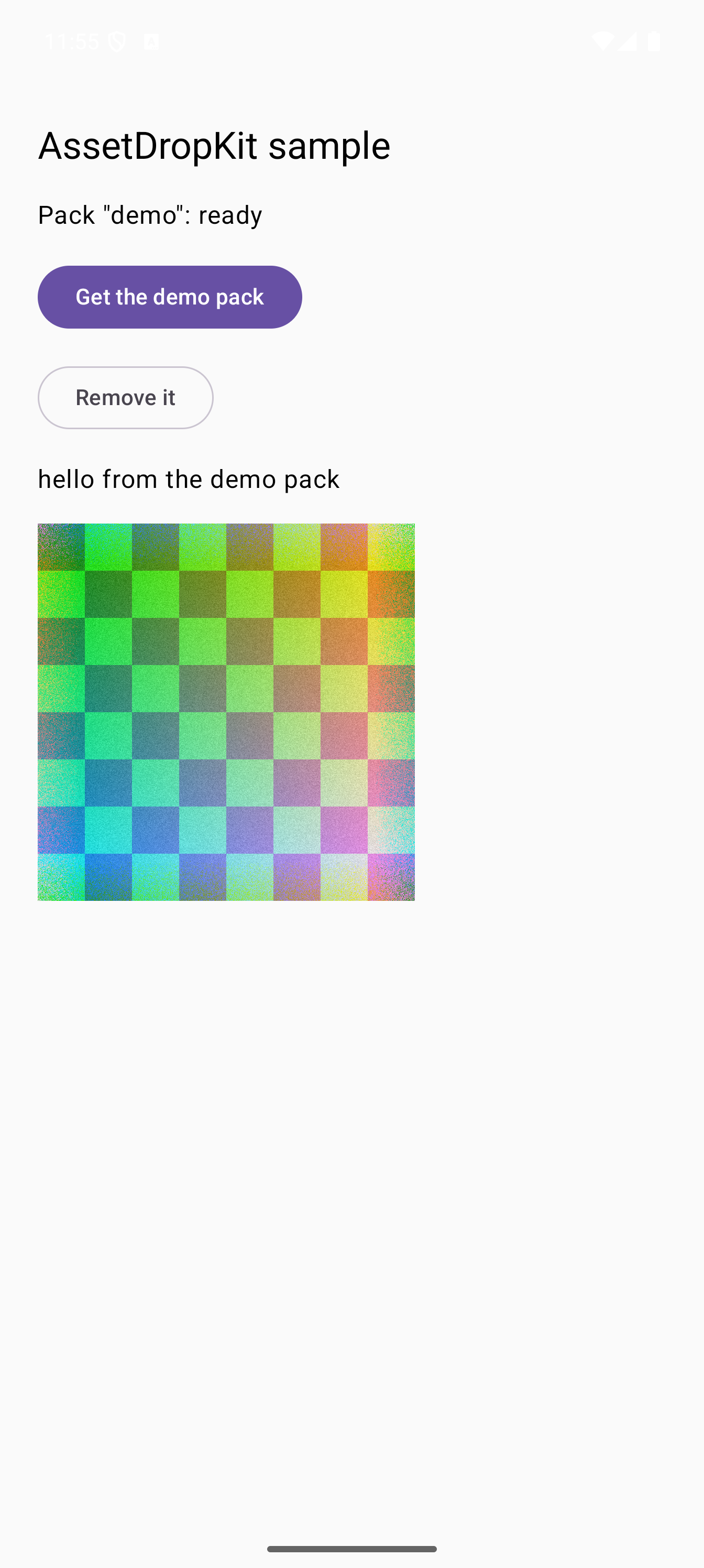
| Android (minSdk 24) | Play Asset Delivery, on-demand packs | Google Play |
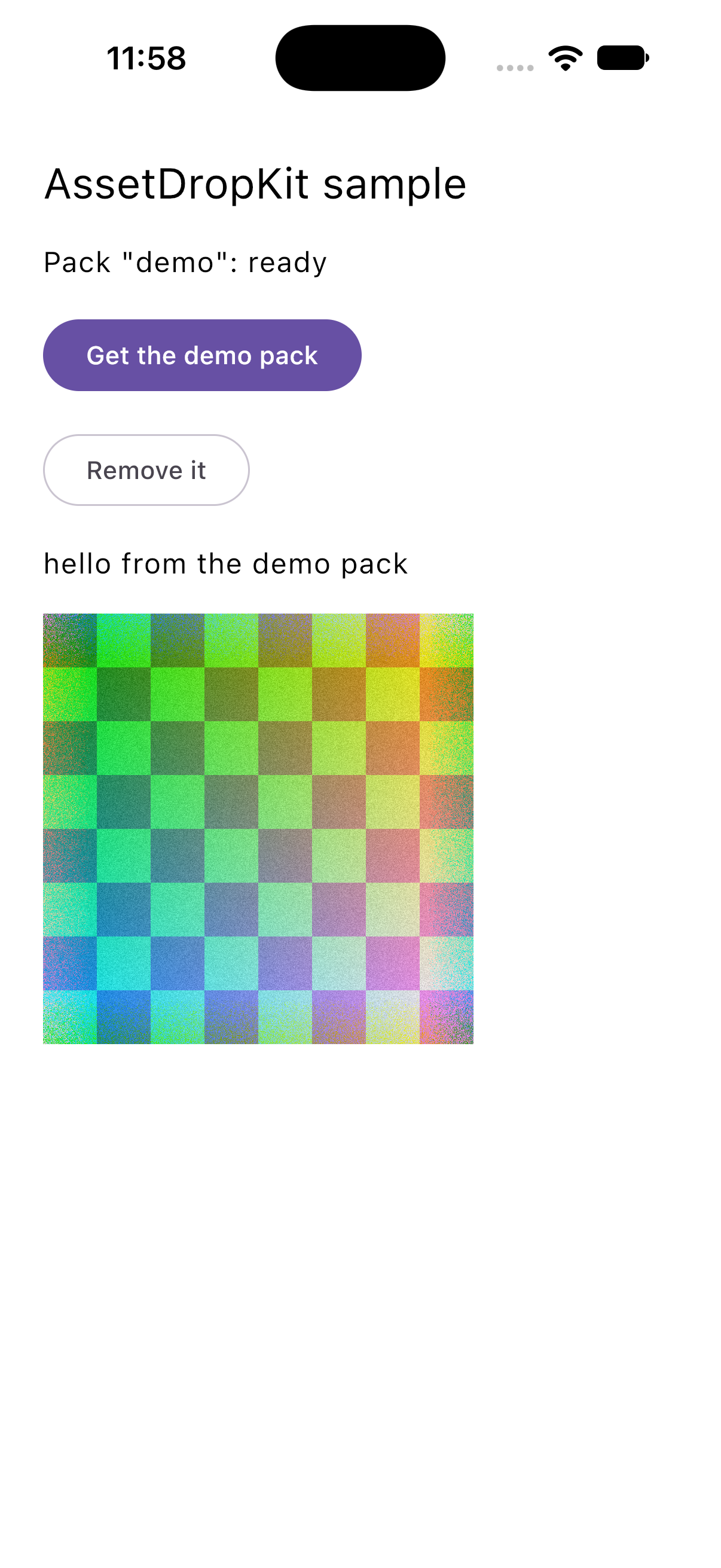
| iOS 26 and later | Apple-hosted Background Assets | the App Store |
| iOS 17 and 18 | On-Demand Resources | the App Store |
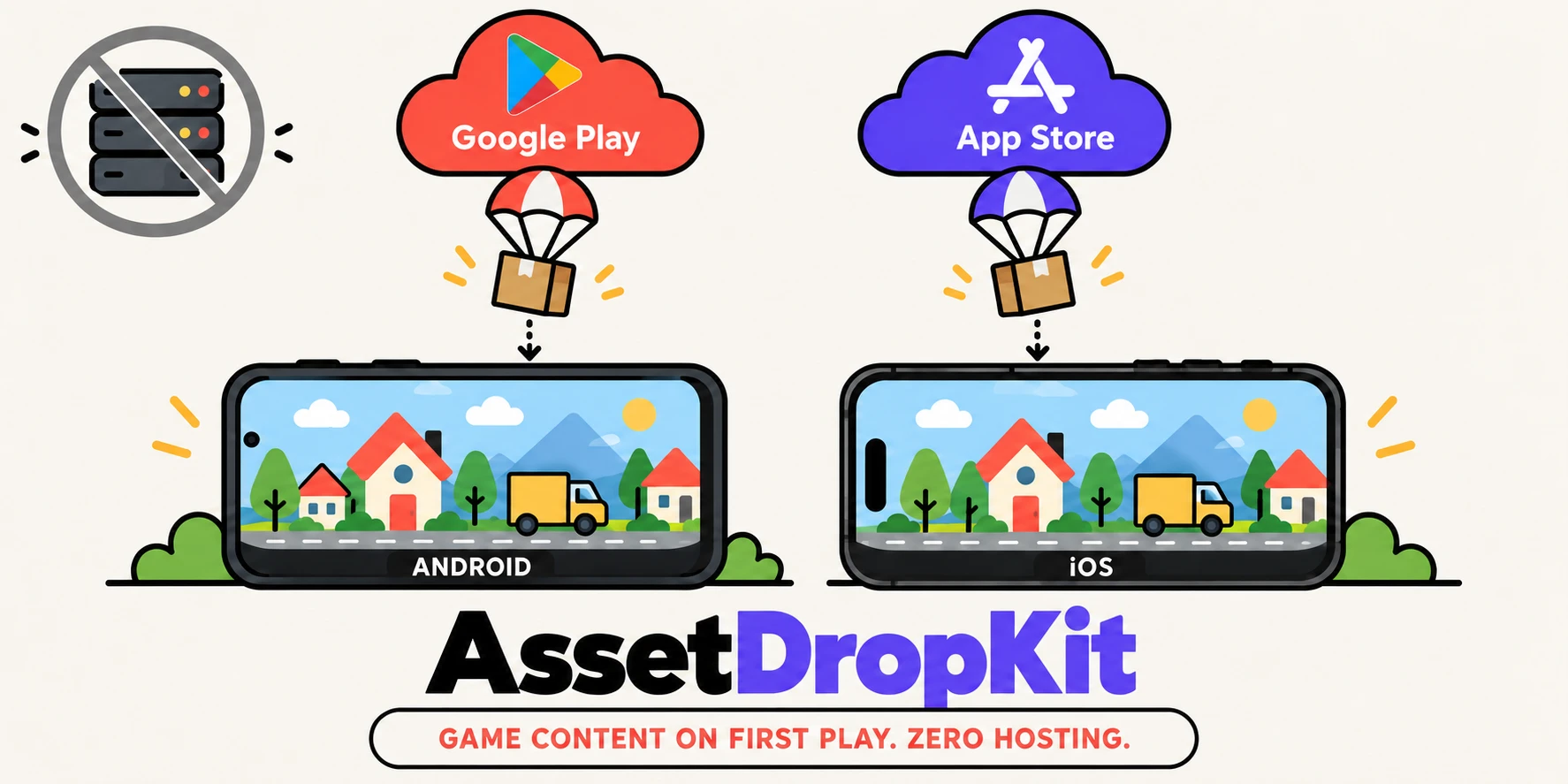
The stores host the bytes, so there is no server and no hosting bill. Your app keeps its install size small and fetches a game's art the first time someone plays it.
Quickstart
// commonMain
val packs = AssetPacks(source = source) // PlayAssetPacks on Android, AppleStoreSource on iOS

when (val state = packs.fetch("postdelivery")) {
    PackState.Ready -> {
        val glb = packs.readBytes("postdelivery", "town/sedan.glb")
    }
    is PackState.Failed -> showOfflineFallback(state.reason)
    else -> askTheUser() // WaitingForWifi or NeedsPlayConfirmation, Android only
}

packs.state("postdelivery").collect { state -> showProgress(state) }
- Two callers fetching the same pack share one store request.
- Every pack is checked against its
assetdropkit.jsononce per version; a changed or missing file removes the pack, fetches it once more, then reportsFailed(Corrupt). readBytesruns on the dispatcher you inject (defaultDispatchers.Default), never on the caller's thread.- After a relaunch, the first state comes from the store, so a download that was running shows as running; a store's Ready becomes Ready only once the pack matches its manifest.
stallTimeoutMillisturns a download that stops moving (offline, parked in Pending) intoFailed(NoNetwork).
Install
// shared module
commonMain.dependencies { api("com.vocabloot:assetdropkit:0.1.1") }
commonTest.dependencies { implementation("com.vocabloot:assetdropkit-test:0.1.1") }
The Apple side is a Swift package: add https://github.com/vaazh-studios/assetdropkit in Xcode.
Then follow Android, iOS and Packaging.